Product data that finally compounds
Molly&My sell fashion across 8 markets. Their product data was rebuilt from scratch for every language, channel and SEO pass, so growth kept stalling. Cernel turned that fragmented work into one centralised foundation that scales itself.
.png)


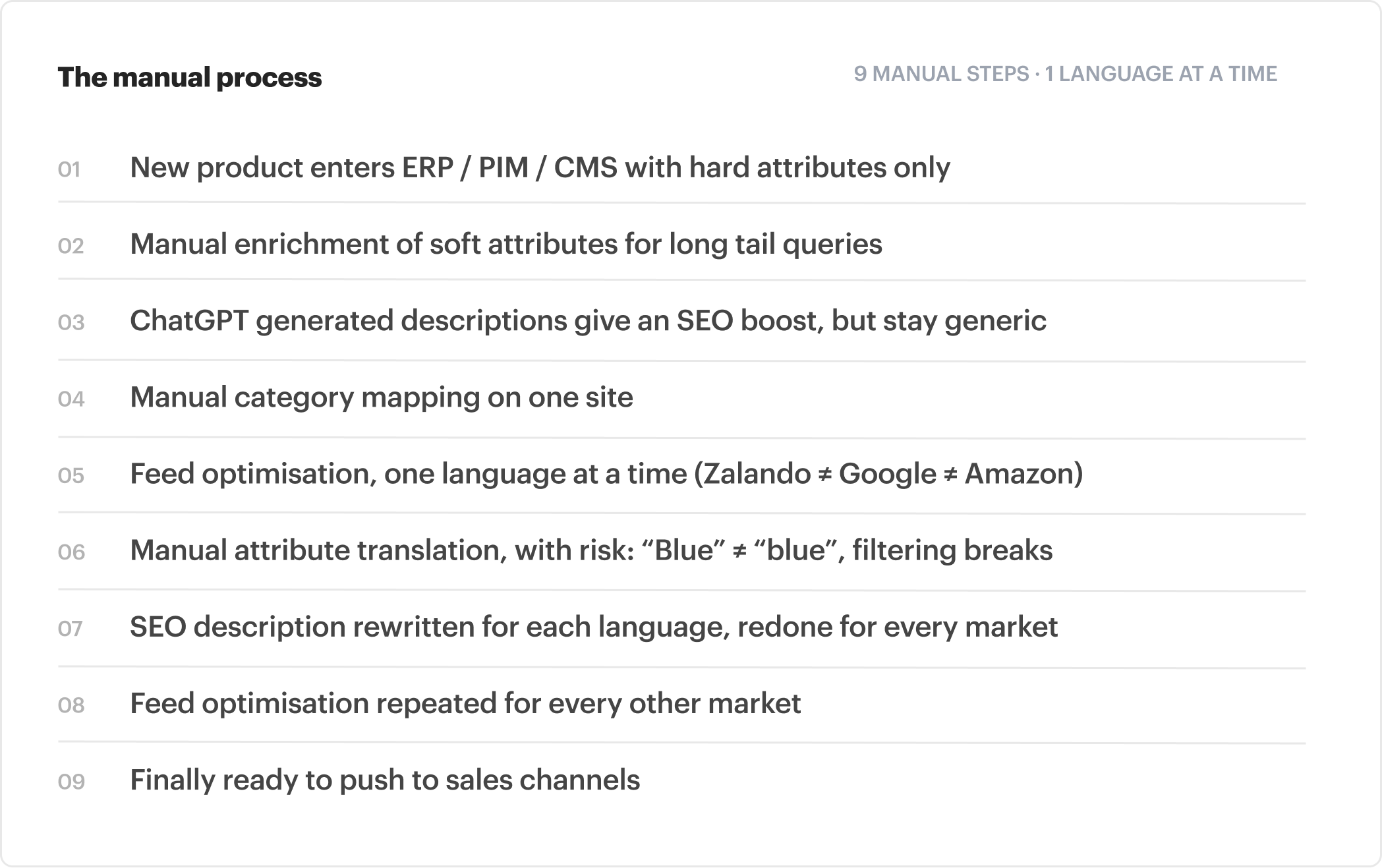
The manual workflow was a chain, not a foundation
When product data isn't centralised, every team is forced to start from zero. Attributes, translations and categorisations get rebuilt again and again instead of reused. Withoutshared context there is no compounding effect, and without compounding, growth stalls.
Every new dimension, whether a language, a channel or an SEO pass, forced the team back into the same long chain instead of building on a shared foundation. Each link was manual, and any one could break the next.
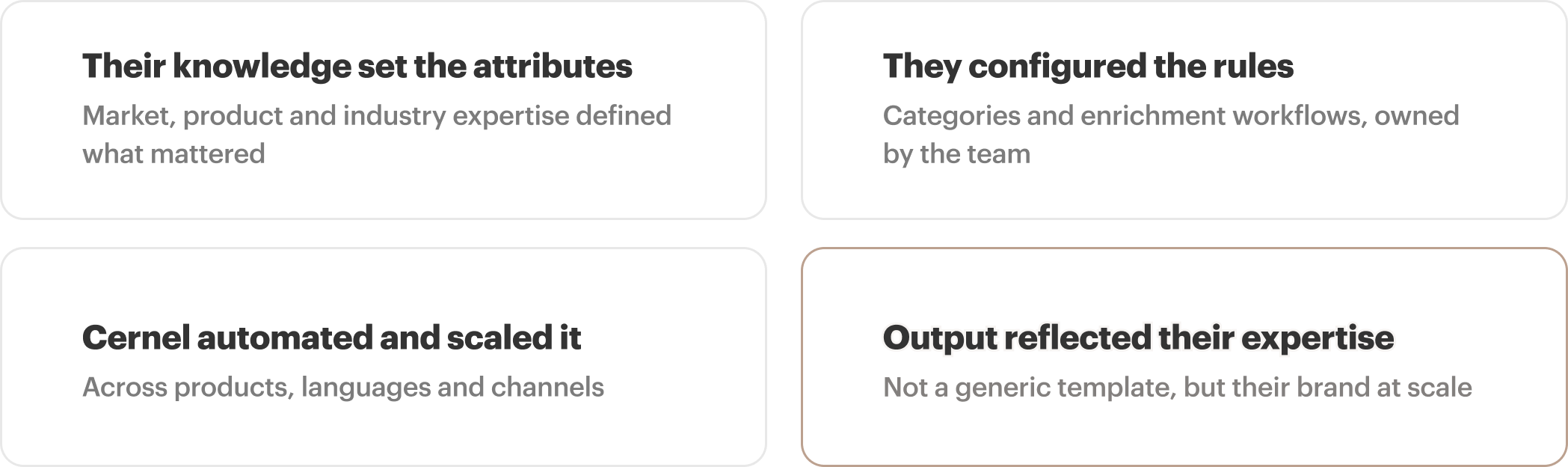
Configured by Molly&My's team, scaled by Cernel
The output reflects Molly&My's expertise, not a generic AI template. Their team set the rules;
Cernel did the work across every product, language and channel.
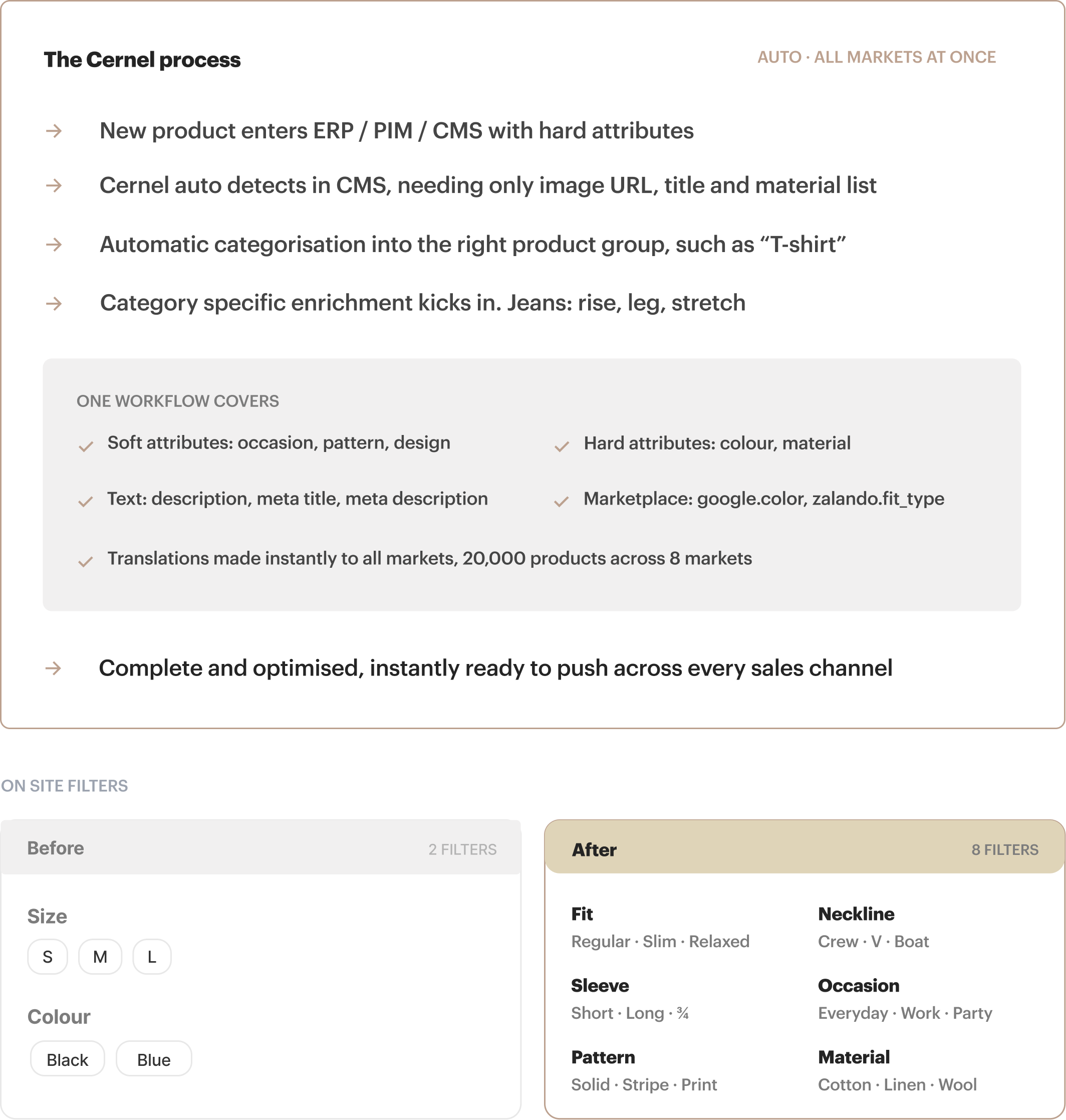
From treadmill to escalator
Manual workflows are a treadmill: you keep moving but never compound progress. Centralisation turns the treadmill into an escalator. Every step builds on the last.
Beyond the headline numbers, centralised product data unlocked compounding advantages across the business.
→ Faster growth: shorter time to market and better product discoverability
→ Lower costs: less manual work, fewer errors, no feed rejections
→ Stronger brand experience: consistent, accurate data across all markets
→ Greater flexibility: adapt quickly to trends and channel requirements
→ A scalable foundation: built for the future of commerce across platforms and markets