A face cream can be described as moisturising and containing hyaluronic acid. But that does not necessarily tell the customer whether it suits sensitive skin, or how it should be used together with other products.
The difference between a description and useful advice is central to Cernel's collaboration with Matas. Here, the technology company works on structuring and enriching product information, so that it becomes more useful in the existing business and can support new AI-based channels.
For Cernel's founder and CEO, Andreas Busch, the company started precisely with the realisation that better texts require a better foundation.
"We actually started by building AI that wrote product texts. But the more we worked with the customers, the clearer it became that the text was not the problem. The problem was the data underneath the text," he says.
At retailers, information is often spread across supplier files, spreadsheets and product information systems. The formats vary, and staff have to make the material fit the company's structure before the products can be sold.
60,000 products demand more than writing power
At Matas, the scale is a significant part of the challenge. New products have to be made ready for campaigns and season launches, while the information has to reflect the company's standards for advice.
"When you have 60,000 products, it is not economically possible to have good and relevant product descriptions on all products without using AI, but there has to be tight control of that same AI," says Peter Hestbæk, SVP Growth & Paid Media at Matas.
Cernel's task is to collect and process the complex information at scale. The work includes structuring supplier data, adding relevant information and checking the result before it is reviewed by an employee.
For Andreas Busch, the answer to the pressure on the operational teams is therefore a change to the process itself:
"It's not a question of running faster. The way of working has to change."
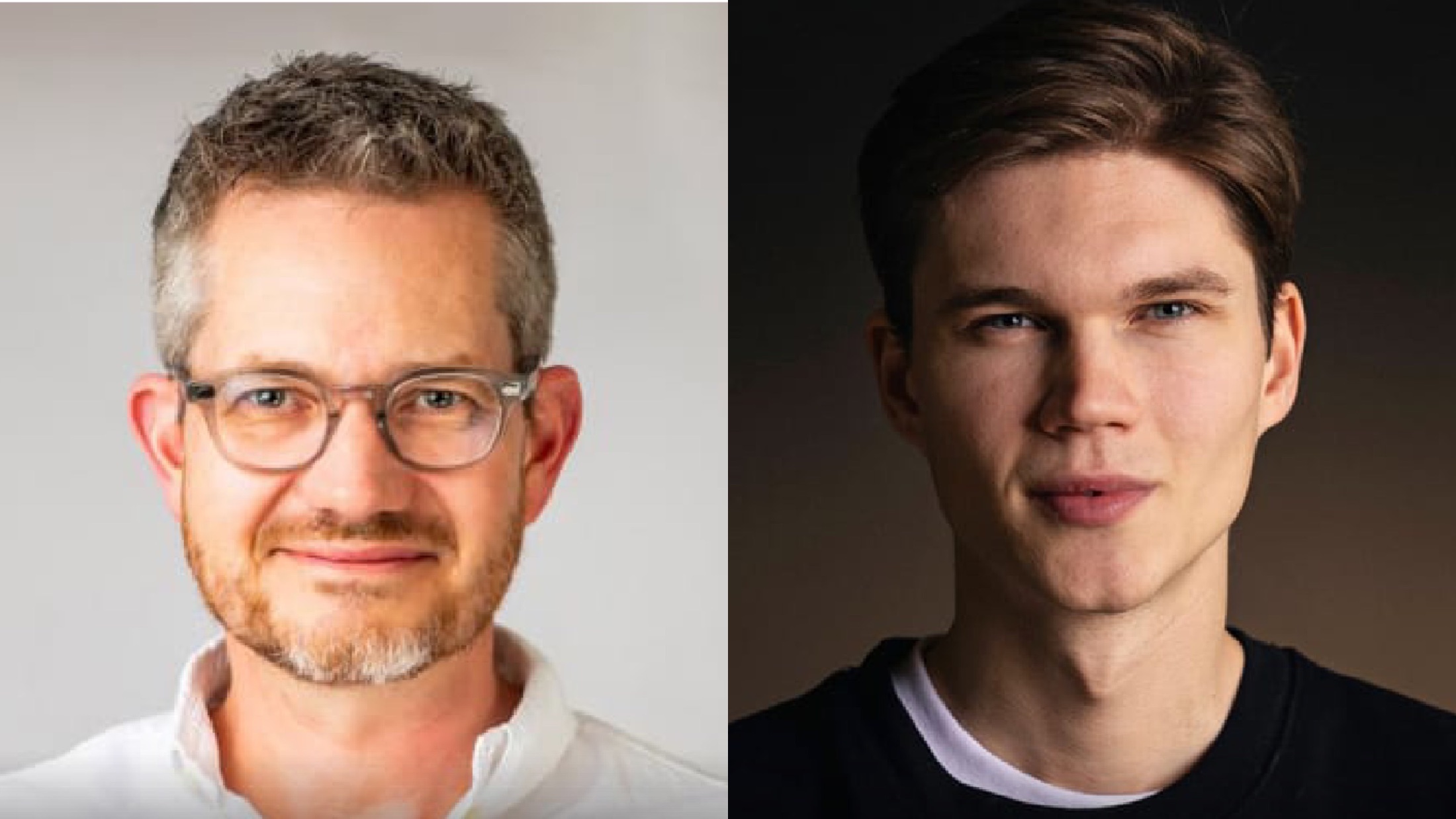
- Peter HestbækSVP Growth & Paid Media, Matas
- Andreas BuschFounder and CEO, Cernel
The in-store experts' knowledge has to go into the system
The Matas case is also about who sets the standard for the information AI works with. Here, Cernel sees the expertise of Matas' in-store experts as a decisive resource: knowledge of skin types, use, routines and the considerations the customer has to take.
"That knowledge should not be replaced. It should reach every product," says Andreas Busch.
The division of work is that Matas defines the requirements for advice and product texts and assesses the quality. Cernel uses this foundation across the catalogue. According to Andreas Busch, this means that new data points, for example on skin type or use, can be added to the range in a few hours, because the structure and the expert rules are already in the system.
For Matas, the ability to work in detail with different product categories is exactly what matters. Peter Hestbæk stresses that the company's knowledge must be recognisable in the result.
"Otherwise you could just take ChatGPT and get a product text. That is not what we are here to do. We have to advise and guide our customers, and that is unique to each individual category."
By gathering requirements and processes in one place, the setup can be adapted to new products instead of being built up from scratch. That is to shorten the path from received supplier information to a product that is ready for launch.
A missing piece of information is not an invitation to guess
The automation places demands on control. In the collaboration, data and texts are assessed by quality agents against Matas' requirements across product types, markets and regulatory conditions. Information has to be traceable, and questions that require a judgement go on to an employee.
That moves the staff's effort from the initial collecting and processing to quality, and to the exceptions where experience is needed.
According to Matas, several thousand products have already been optimised with Cernel, and the time spent on product enrichment has fallen markedly. The next step is to extend the work to Norway, Sweden and Finland.
The customer's needs must be readable by a machine
The work reaches beyond the individual product page. When customers search through AI services, the question also becomes whether the systems can connect a product with a specific need.
Peter Hestbæk expects that more customers will start with a situation or a wish rather than a product name. That requires information about who the product is relevant for, how it is used and what it can be combined with.
Here, Cernel connects the practical data task with preparing for the commerce of the future. How external AI services will choose and rank products is still open. Retailers can, however, already work on the foundation for being understood correctly.
For Cernel, the task is to make Matas' expertise usable at scale without it losing what makes it distinctive. That is also Andreas Busch's point about the division of work:
"People set the standard, and Cernel makes sure it is upheld on every single product."
When the customer asks which cream suits sensitive skin, the answer has to build on more than an ingredient list. Cernel is to help bring into play the knowledge that enables Matas to advise. Also when the conversation begins with an AI.
About this article
This article was written by Contentway and published in Danish in Future of Commerce, a supplement distributed with Børsen, on 11 November 2026. This is an English translation. Read the original article in Danish (PDF)